History · Chapter III
Chapter III — Civil reinvention.
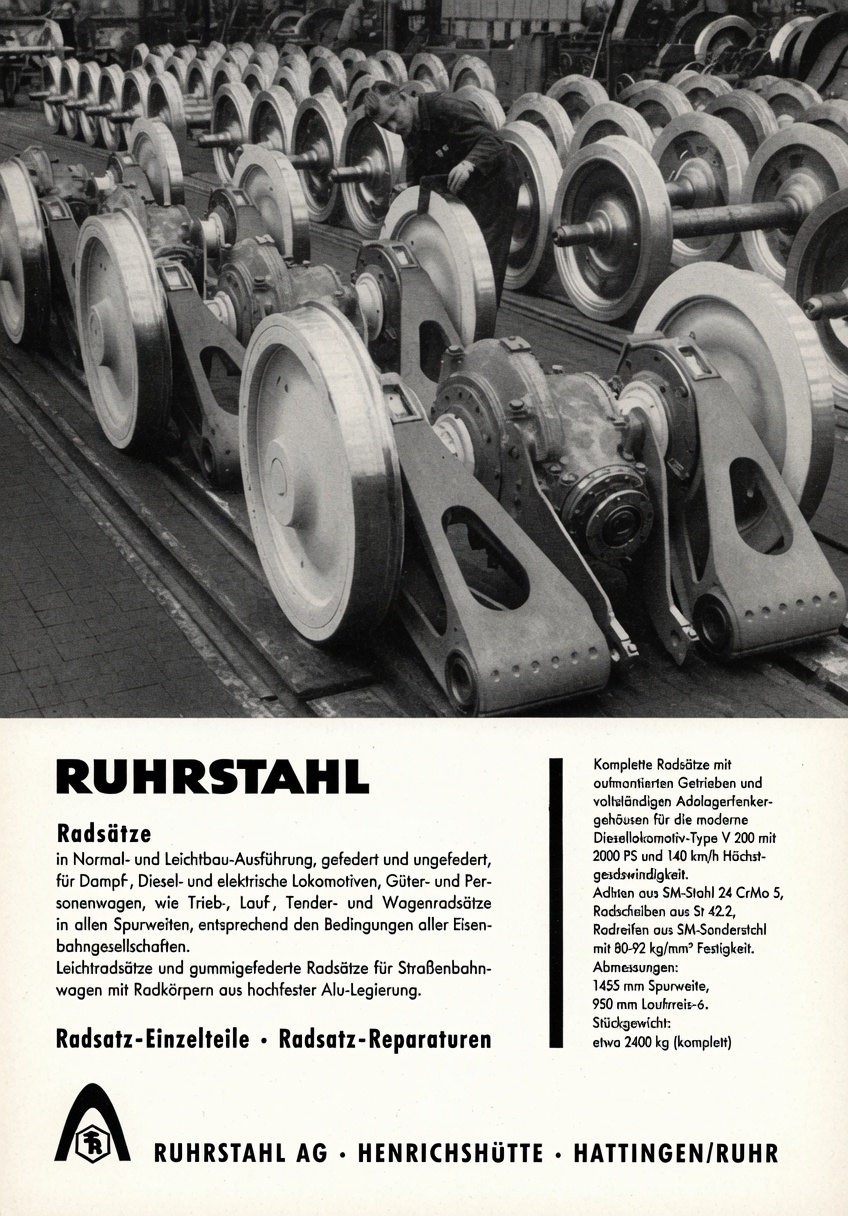
After 1945 — from armaments to civilian engineering, agricultural machinery, special steels and the first components for German civil nuclear power.
Timeline
Postwar
From armaments to civilian engineering.
Following the end of the Second World War, armaments production ceased and Ruhrstahl redirected its engineering and manufacturing capabilities towards civilian applications.
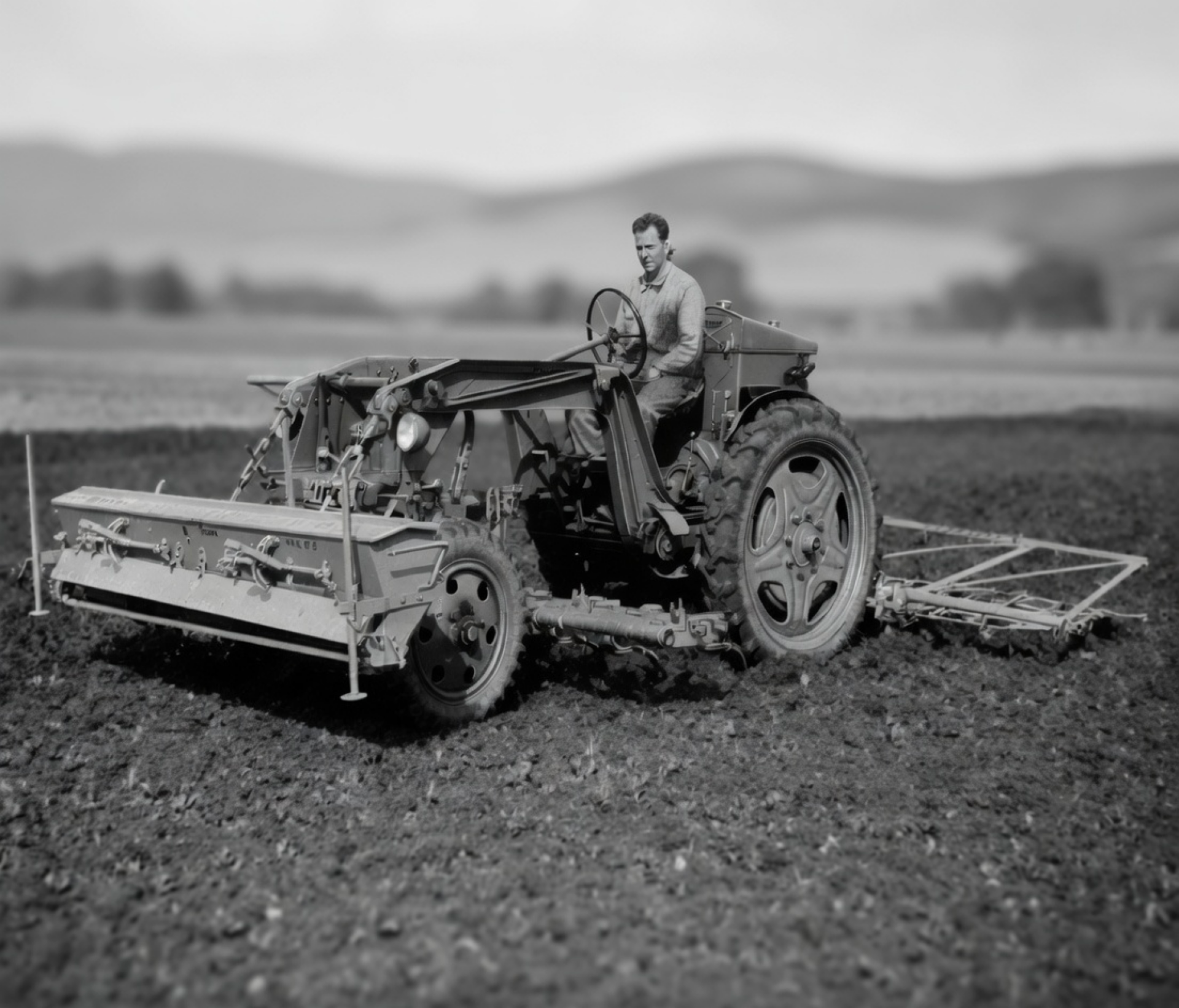
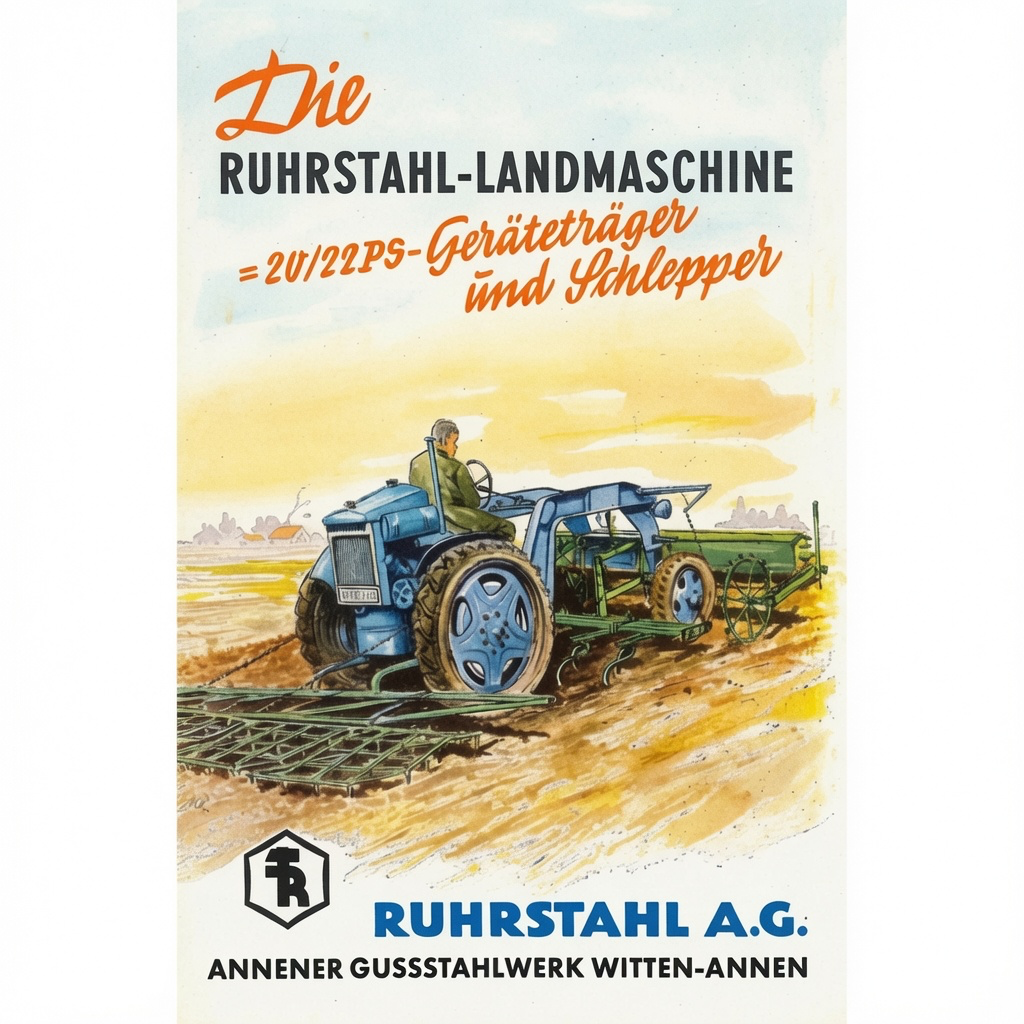
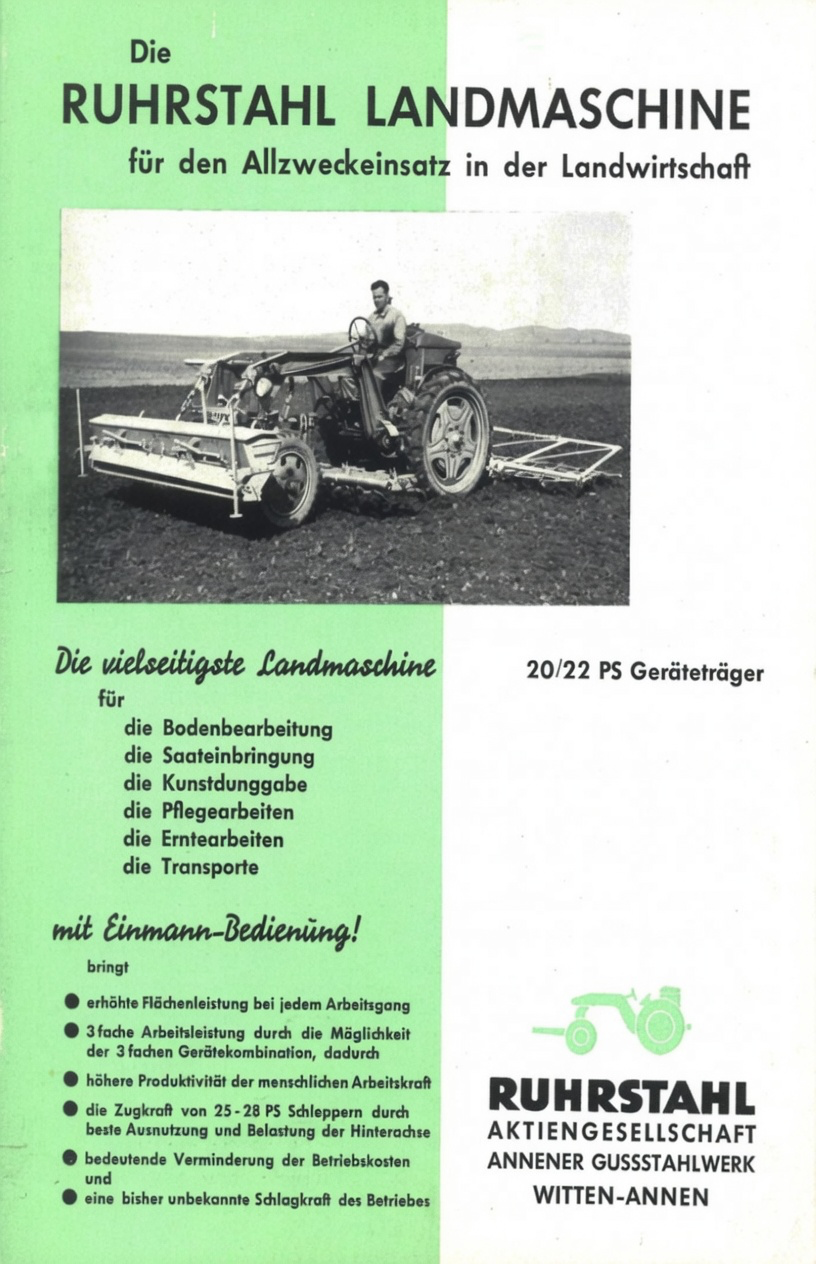
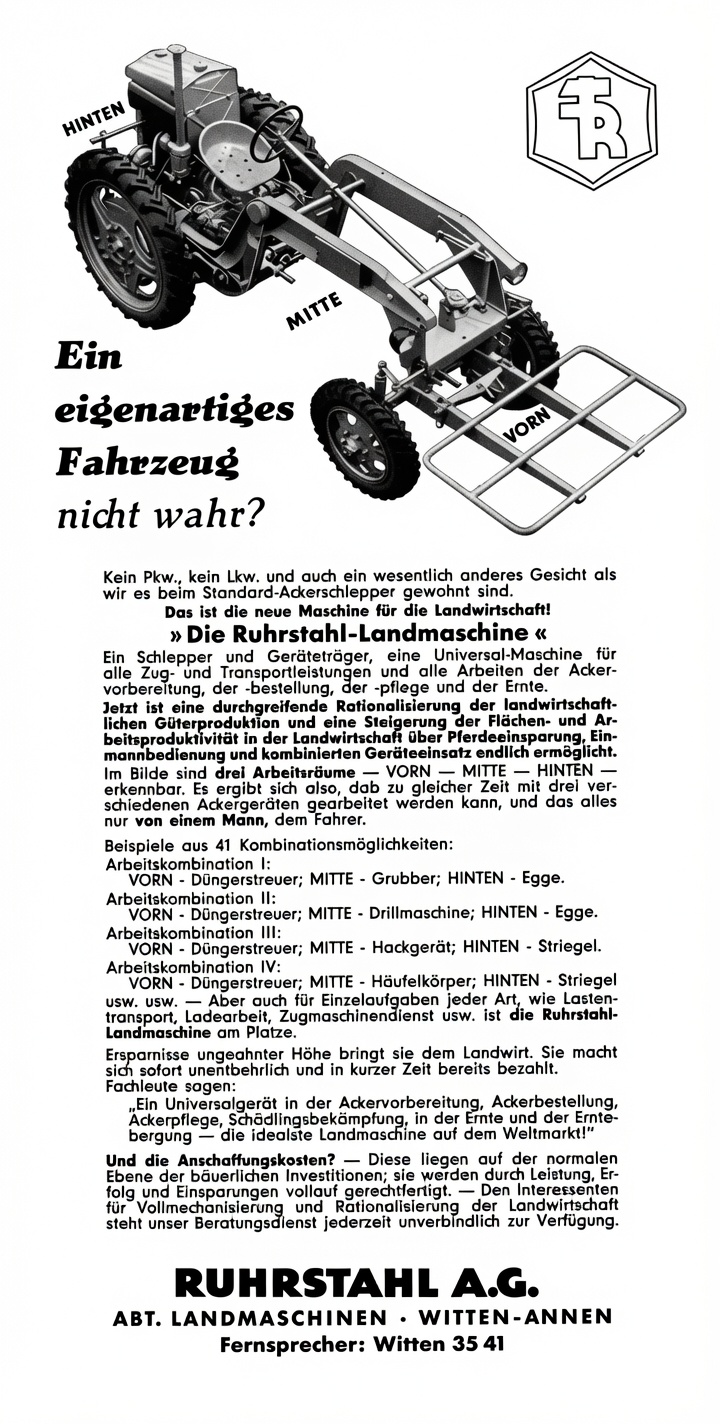
In 1951, the company introduced the Ruhrstahl Geräteträger, an innovative multipurpose agricultural vehicle manufactured at the Annener works in Witten. Its unusual construction allowed different agricultural tools to be mounted between the axles, giving the operator a clear view of the equipment.


During the late 1950s, Ruhrstahl was also involved in the development of the Ruhrstahl–Heraeus process, an important vacuum-degassing method used in the production of high-quality steel.
Ruhrstahl became part of the Rheinstahl group in 1957. In 1963, Ruhrstahl AG was combined with Rheinisch-Westfälische Eisen- und Stahlwerke AG to form Rheinstahl Hüttenwerke AG. This reorganisation marked the end of Ruhrstahl AG as an independent company.
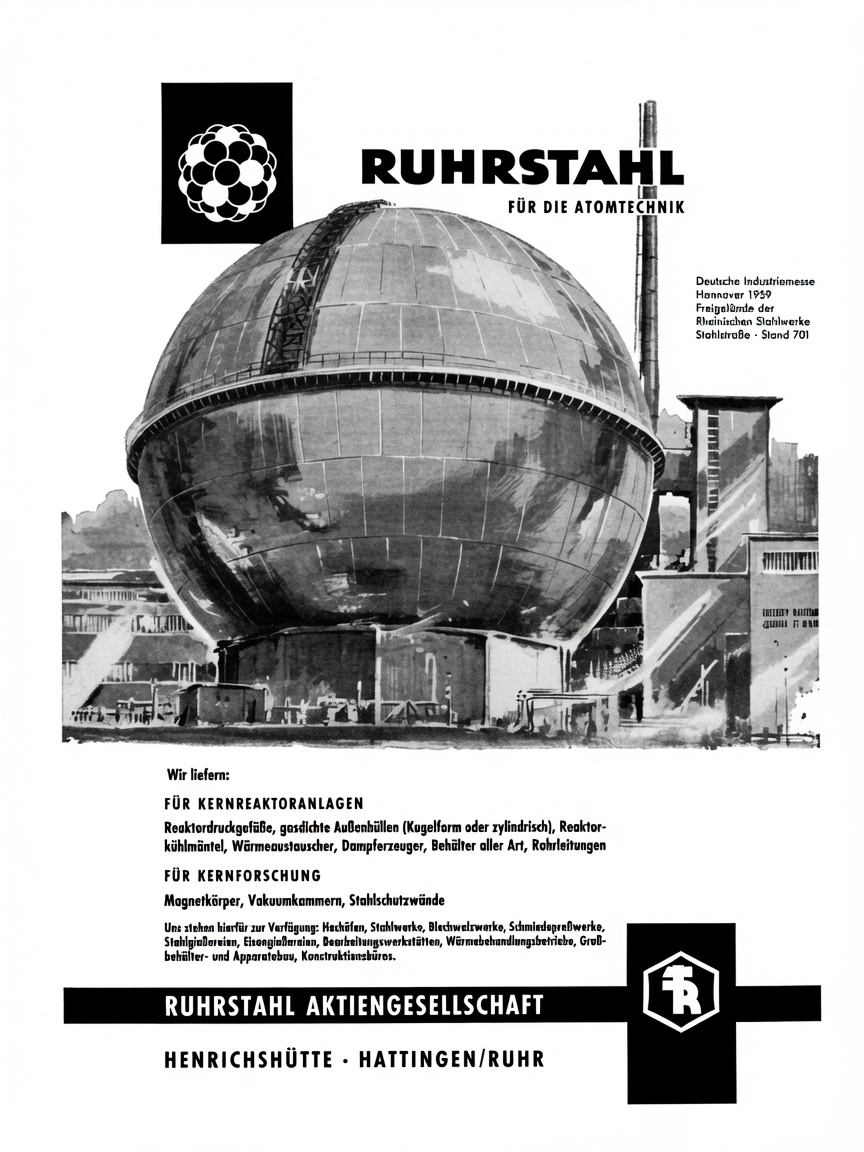
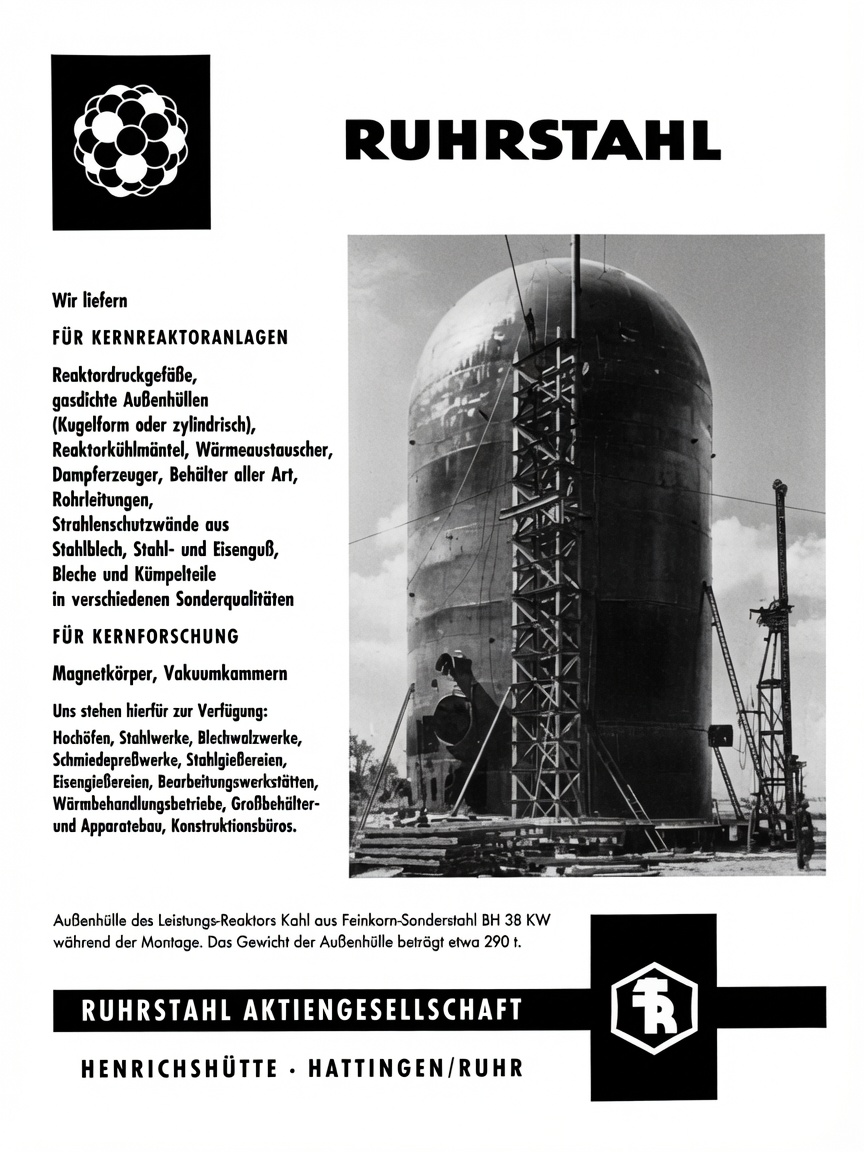
By the late 1950s, Ruhrstahl's postwar reinvention extended into one of the most advanced industrial fields of the era: civil nuclear engineering. From the Henrichshütte in Hattingen, Ruhrstahl supplied heavy components for German nuclear power plants and research facilities — reactor pressure vessels, gas-tight containment shells in spherical and cylindrical form, reactor cooling jackets, heat exchangers, steam generators, pressure vessels of every kind, piping, and radiation-shielding walls in steel plate, steel and iron castings, plate and dished heads in special-grade steels. For nuclear research the works produced magnet bodies and vacuum chambers.
A signature reference was the outer containment shell of the Kahl experimental power reactor (VAK) — Germany's first commercial nuclear power station, fabricated from BH 38 KW fine-grain special steel and weighing approximately 290 tonnes during assembly. It marked the moment Ruhrstahl's heavy-forge and pressure-vessel expertise, once directed at wartime production, was placed at the service of peaceful nuclear power.