
SD 1400 X · PC 1400X
Fritz XRuhrstahl SD 1400 X
The world's first operational precision-guided anti-ship glide bomb.
01
Development & Purpose
Dr. Max Kramer, a German engineer, initiated experiments with radio-controlled bombs in the late 1930s. By 1940, the industrial manufacturer Ruhrstahl AG was contracted to transform these concepts into a practical weapon system. The primary objective was to equip Luftwaffe bombers with a precision-guided munition capable of engaging heavily armored capital ships from safe stand-off distances, well beyond the reach of naval anti-aircraft artillery.
This addressed the growing challenge of attacking fortified Allied warships while minimising bomber losses. The Fritz X was developed as an unpowered glide bomb based on the existing PC 1400 armor-piercing bomb, enhanced with aerodynamic control surfaces and radio guidance. It represented Nazi Germany's pioneering effort in precision-guided munitions during World War II.
02
Technical Highlights
The Fritz X was a large, heavy glide bomb engineered for maximum armor penetration at high terminal velocities.
- Weight
- ~1,570 kg (3,460 lb)
- Warhead
- 320 kg (710 lb) Amatol, armor-piercing
- Length
- ~3.26–3.32 m
- Diameter
- ~0.56 m
- Wingspan
- ~1.35–1.4 m
- Guidance
- Kehl–Straßburg FuG 203/230, MCLOS radio command
- Control surfaces
- Cruciform (X) wings + box-tail spoilers
- Launch altitude
- 4,000–8,000 m (~5 km stand-off)
- Terminal speed
- >1,200 km/h in dive
- Armor penetration
- 20–28 cm deck armor
- Carrier aircraft
- Dornier Do 217
- Visibility aid
- Tail-mounted tracking flares
03
Testing & Combat Record
The Fritz X entered operational service in the summer of 1943 with Kampfgeschwader 100. Its combat debut occurred during the Sicily campaign in July 1943. The weapon achieved its most spectacular success on 9 September 1943 when Do 217 bombers attacked the Italian fleet en route to surrender. Two direct hits sank the battleship Roma (the Italian flagship), causing heavy loss of life, while the sister ship Italia was also damaged.
Subsequent operations off Salerno proved equally effective, severely damaging the British battleship HMS Warspite (which was out of action for months) and the American light cruiser USS Savannah, along with several other vessels. Roughly 1,400 units were manufactured. As the first precision-guided weapon used in combat, the Fritz X demonstrated the transformative potential of guided munitions by successfully striking major warships from stand-off range. However, its effectiveness declined sharply due to Allied radio jamming, increasing air superiority, and the vulnerability of the slow-flying bomber during guidance.
04
Legacy & Significance
The Fritz X established the foundational concept for modern stand-off precision strike weapons. Despite its limitations — requiring clear weather, visual line-of-sight, and exposing the carrier aircraft — it proved that guided bombs could neutralise high-value targets that were previously difficult to hit.
The system influenced post-war guided bomb development worldwide and highlighted both the promise and challenges of early radio-guided technology. Today it is remembered as a groundbreaking achievement in weapons engineering that helped usher in the era of "smart" munitions.
05
Cutaway Diagram
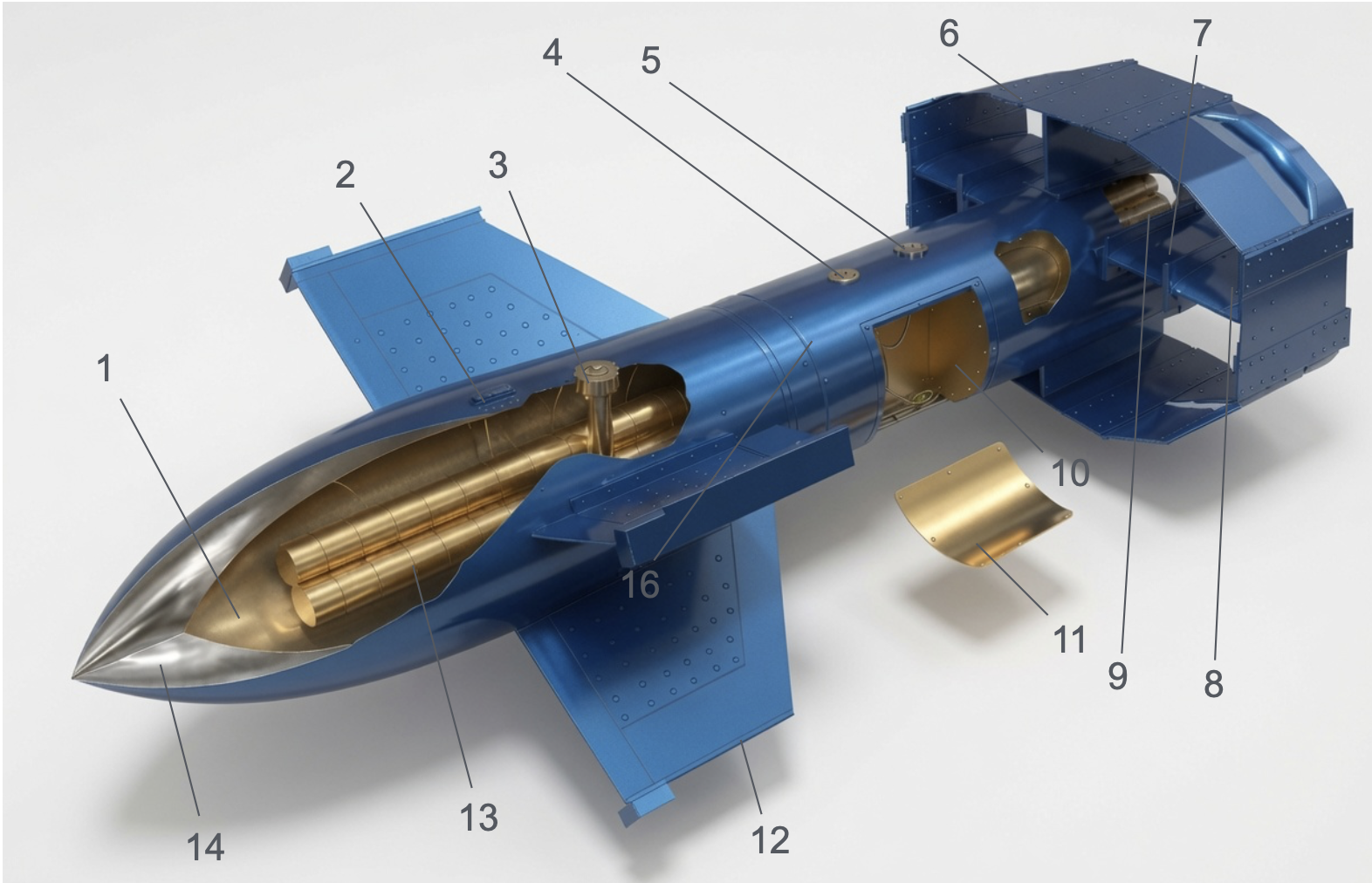

Legend / Key
Numbered components
- 01Warhead with 300 kg of Amatol
- 02Suspension points
- 03Main fuse receptacle
- 047-pin flange
- 05Hot air regulator
- 06Outer tail section ring
- 07Control interrupter
- 08Main control device (Wagner-Riegel above and below)
- 09Exhaust jets
- 10Main control chamber and radio control systems
- 11Access panel for the control chamber
- 12Four wings
- 13Central explosive tubes
- 14Armor-piercing warhead
Compare with other weapons